Local SEO 101: A Comprehensive Guide to Dominating Your Local Market

Table of Contents

When people nearby search for the products or services you provide, does your business appear?

Local SEO is the process of improving your visibility in location-based search results. This includes traditional organic listings, Google Maps and the local pack displayed for searches such as “electrician near me” or “accountant in Leeds.”

A strong local SEO strategy helps you reach people who are actively looking for a nearby business. It can generate website visits, phone calls, direction requests and enquiries from customers in the areas you serve.

However, ranking locally involves more than adding place names to your website. You need an accurate Google Business Profile, relevant service and location pages, consistent business information, positive reviews and evidence that your business is trusted locally.

This local SEO guide explains how those elements work together. You’ll learn how to build a solid local search presence, avoid common mistakes and measure whether your strategy is producing real business results.

Key Takeaways

  • Local SEO helps businesses appear when potential customers search for nearby products, services or providers.
  • Your Google Business Profile is important, but your website, reviews, citations and backlinks also influence local visibility.
  • Create useful pages for genuine services and locations. Avoid producing thin pages for every town or postcode.
  • Keep your business name, address, phone number, opening hours and service information accurate across the web.
  • Track calls, enquiries, bookings and direction requests alongside keyword rankings.
  • Local SEO is an ongoing process. Rankings improve through consistent optimisation, stronger authority and genuine customer trust.

What Is Local SEO?

Local SEO is the process of improving a business’s visibility when people search for products or services within a particular area.

It applies to searches that include a location, such as “SEO consultant Leeds,” as well as searches where Google recognises local intent, such as “SEO consultant near me.”

Local SEO can help your business appear across several parts of the search results:

  • The Google local pack

  • Google Maps

  • Localised organic search results

  • Your Google Business Profile

  • Location-based results in AI-powered search tools

The goal is not simply to generate more website traffic. It is to reach potential customers in the areas you serve when they are actively looking for what your business provides.

For example, a plumber does not need to attract website visitors from across the country. They need to appear when someone within their service area searches for an emergency plumber, boiler repair or another relevant service.

That combination of service relevance, geographic targeting and search intent is what separates local SEO from a broader national SEO campaign.

How Do Local Search Rankings Work?
enhancing local seo

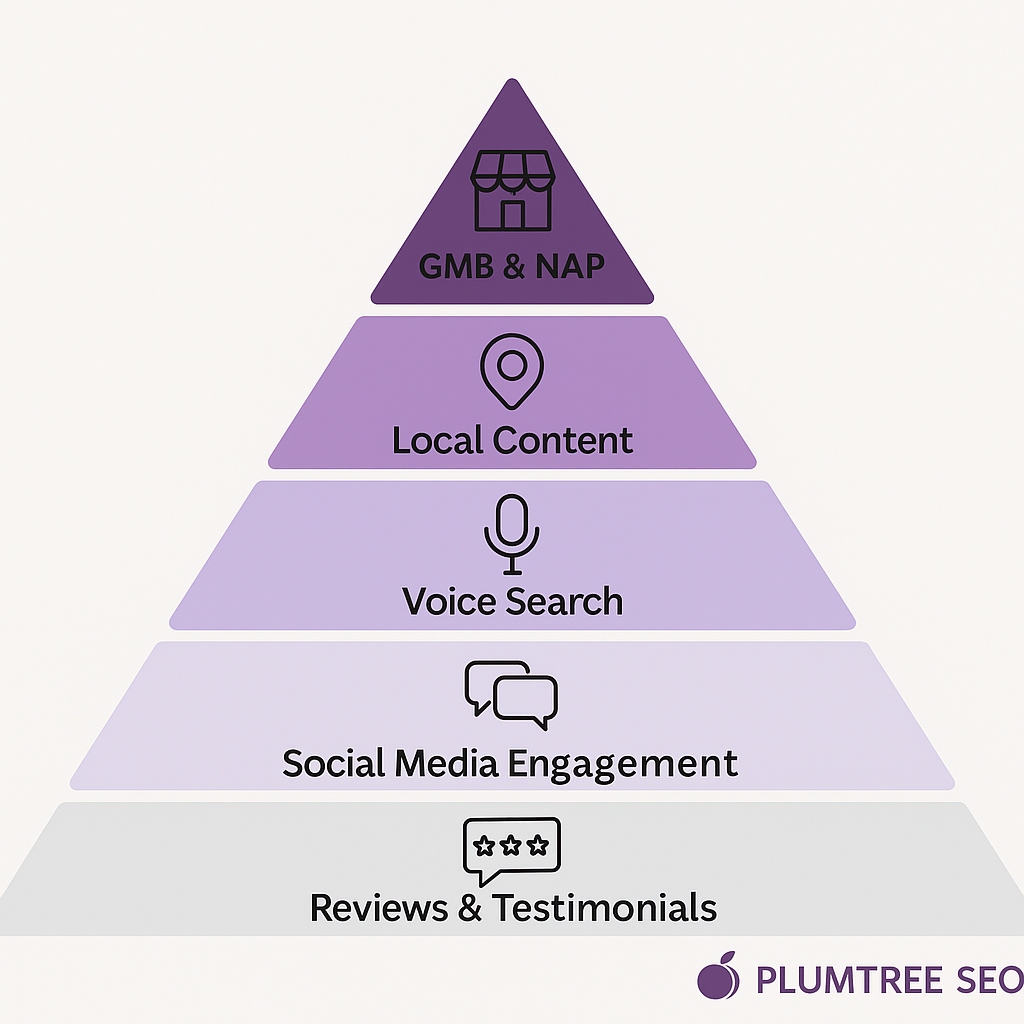
Google aims to show local businesses that are relevant to the search, reasonably close to the user and considered trustworthy.

According to Google’s guidance on improving local rankings, local results are primarily based on three factors: relevance, distance and prominence.

Relevance

Relevance describes how closely your business matches what someone is searching for.

Google uses information from your website, Google Business Profile and other online sources to understand your services.

You can improve relevance by:

  • Selecting accurate Google Business Profile categories

  • Describing your products and services clearly

  • Creating dedicated pages for important services

  • Using relevant local language naturally

  • Keeping your business information complete and accurate

A dental practice offering emergency appointments, for example, should make that service clear on its website and Google Business Profile. Google should not have to guess whether the service is available.

Distance

Distance considers how far the business is from the location used in the search.

Sometimes the user includes a place name, such as “accountant in Morley.” In other cases, Google estimates their location from their device and displays nearby businesses.

You cannot directly optimise your way around physical distance. However, clearly defining your address, service areas and locations helps Google understand where your business operates.

Businesses should avoid adding locations they do not genuinely serve. Creating misleading location pages or setting unrealistic service areas does not make a business more locally relevant.

Prominence

Prominence reflects how established and trustworthy a business appears.

Google may consider signals including:

  • Customer reviews

  • Links from other websites

  • Business citations and directory listings

  • Brand mentions

  • Website authority

  • Local press coverage

  • The completeness and activity of your Google Business Profile

A business with strong reviews, accurate listings, useful website content and links from relevant local organisations is more likely to appear credible than one with little supporting information.

This does not mean the business with the most backlinks or reviews will always rank first. The quality, relevance and authenticity of those signals also matter.

Local Pack vs Organic Results

Local SEO influences more than one type of Google result.

Result type
What users normally see
Important signals
Local pack
A map and a small selection of nearby businesses
Google Business Profile, relevance, distance, reviews and prominence
Google Maps
A larger selection of businesses shown on a map
Profile information, categories, location, reviews and engagement
Localised organic results
Standard website listings below or around the local pack
Website content, technical SEO, backlinks, internal links and local relevance

A complete local SEO strategy should target both the map-based results and traditional organic listings.

Your Google Business Profile can help you appear in the local pack, while well-optimised service and location pages give you additional opportunities to rank organically.

Who Needs Local SEO?

Local SEO is most valuable for businesses that serve customers within a defined geographic area.

This includes businesses with physical premises, businesses that visit customers at their location and companies operating from several branches.

Local Service Businesses

Service businesses depend on enquiries from people living or working nearby.

Examples include:

  • Electricians

  • Plumbers

  • Builders

  • Cleaning companies

  • Estate agents

  • SEO consultants

  • Accountants

  • Mortgage brokers

A strong local presence helps these businesses appear when someone needs a particular service within their area.

Businesses With Physical Locations

Shops, restaurants, gyms, salons and other customer-facing businesses can use local SEO to increase visits to their premises.

Potential customers frequently search for opening hours, reviews, directions, availability and nearby options before deciding where to go.

Keeping this information accurate across your website and Google Business Profile can therefore influence both visibility and buying decisions.

Professional Practices

Solicitors, dentists, doctors, financial advisers and similar professionals often compete for clients within a town, city or wider region.

Local SEO helps these practices target relevant searches while using qualifications, reviews, team profiles and local experience to build trust.

Service-Area Businesses

Some businesses serve customers at their homes or workplaces without receiving visitors at their own address.

Examples include mobile mechanics, tradespeople, removal companies and domestic cleaning services.

These businesses can create a service-area Google Business Profile and develop website content around the locations they genuinely cover. They should hide their address if customers are not served there.

Multi-Location Businesses

Businesses operating from several genuine locations need a structured local SEO strategy.

Each branch should normally have:

  • Its own Google Business Profile

  • A unique location page

  • Accurate contact details and opening hours

  • Locally relevant content

  • Reviews connected to that location

  • Clear links between the location page and relevant services

Changing the place name on otherwise identical pages is not enough. Every location page should provide useful information specific to customers in that area.

When Is Local SEO Less Important?

Not every business needs to prioritise local rankings.

Local SEO may be less important if:

  • You sell exclusively online without serving particular locations

  • Your customers are located nationally or internationally

  • Location has little influence over who can use your services

  • You operate as a remote business without a genuine local customer base

  • Your audience searches primarily by product, industry or specialist requirement rather than location

For example, an online software company serving customers worldwide may gain more from a national content and product-led SEO strategy. A local electrician, however, will usually benefit significantly from visibility within the towns and cities they cover.

Some businesses need both approaches. Plumtree SEO, for example, can target businesses looking for an SEO consultant in Leeds while also offering managed SEO services to companies throughout the UK and internationally.

The right strategy depends on where your customers are located, how they search and whether proximity affects their decision.

How to Do Local SEO: 10 Essential Steps
local seo strategies

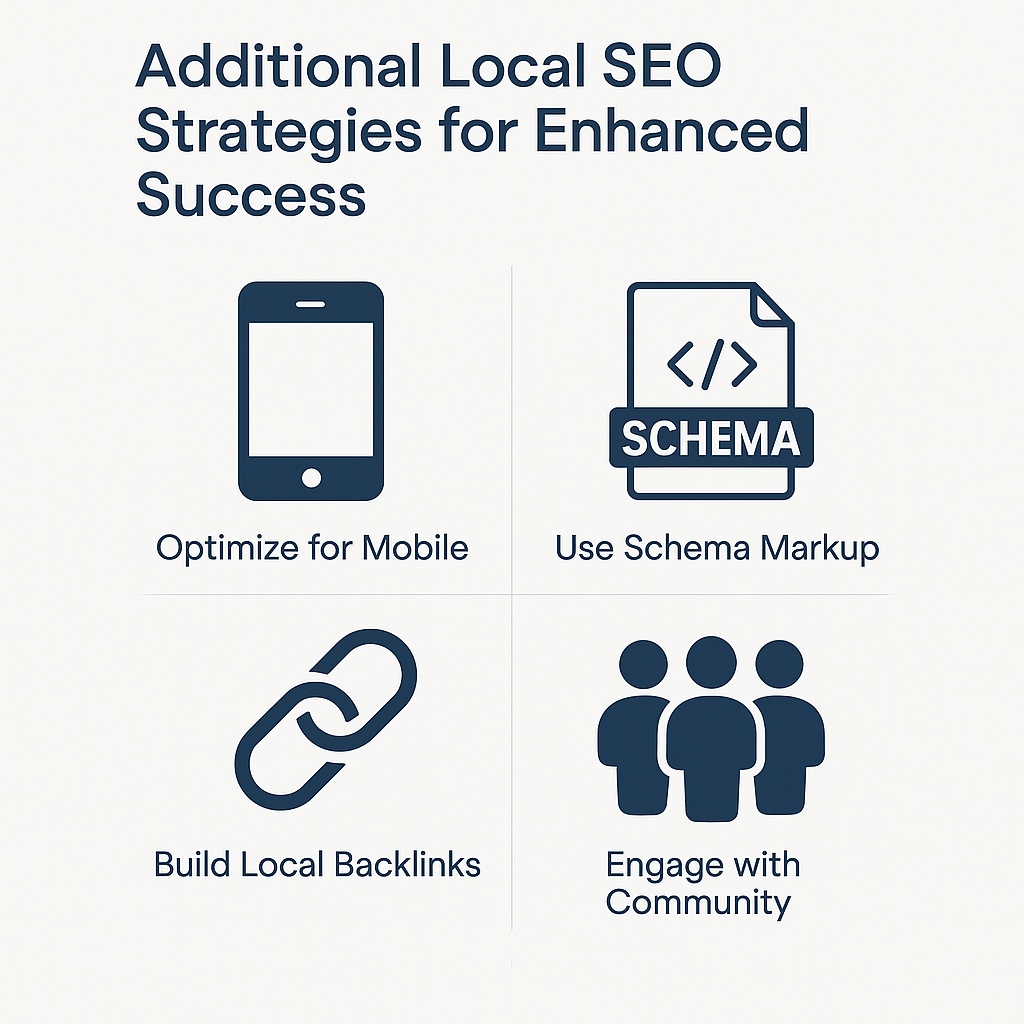
Local SEO involves improving several connected parts of your online presence. Your website tells search engines what you offer, while your Google Business Profile, reviews, citations and backlinks help confirm where you operate and whether customers trust you.

The following steps provide a practical roadmap for improving your local visibility.

1. Create and Verify Your Google Business Profile

A Google Business Profile is a free listing that allows your business to appear across Google Search and Maps.

Claim your existing profile before creating a new one. Duplicate listings can confuse customers and make managing your local presence more difficult.

Once you have access, complete every relevant section, including:

  • Business name

  • Primary and secondary categories

  • Address or service area

  • Phone number

  • Website

  • Opening hours

  • Products and services

  • Business description

  • Photographs

  • Appointment or enquiry links

Use your real-world business name. Adding keywords or locations that are not part of your genuine business name could breach Google’s guidelines.

The information should also remain accurate. Update your opening hours, services, photographs and contact details whenever something changes.

Storefront and Service-Area Businesses

A storefront business receives customers at a permanent physical location. Its address can normally be displayed publicly.

A service-area business travels to customers instead. If customers do not visit your address, hide it and specify the areas you genuinely serve.

Some businesses operate as both. For example, a plumbing supplier may have a showroom while also sending engineers to customers throughout the surrounding area.

Choose the setup that reflects how your business actually operates. A virtual office, temporary workspace or address where customers cannot meet your team should not be used simply to gain visibility in another town.

2. Select the Right Business Categories

Your Google Business Profile categories help Google understand what your business does and which searches it may be relevant for.

Choose the category that most accurately represents your main service as the primary category. You can then add secondary categories for other important services you genuinely provide.

For example, an electrical contractor that specialises in generator installation should select the category that best reflects its primary source of work. Relevant secondary categories can cover additional electrical or equipment services.

Avoid adding every category that appears loosely connected to your industry. Irrelevant categories do not make your profile more authoritative and may weaken its focus.

Check your categories periodically because Google adds and changes available options. It can also be useful to review the categories used by genuine local competitors, but only select those that accurately describe your own business.

Your website should reinforce the same services. If your primary category describes you as an accountant but your website barely mentions accountancy, Google and potential customers receive an inconsistent message.

3. Research Keywords With Local Search Intent

Local keyword research identifies the words people use when looking for a business, product or service in a particular area.

These searches normally combine:

  • A service or product

  • A town, city, neighbourhood or region

  • A phrase such as “near me,” “nearby” or “open now”

  • A particular need, problem or buying intention

Examples include:

  • SEO consultant Leeds
  • Emergency dentist near me
  • Boiler repair Wakefield
  • Accountant in Morley
  • Restaurant open now in Leeds

Do not focus only on the keyword with the highest search volume. A more specific search may attract fewer people but generate better enquiries because it reveals exactly what the person needs.

Build a Local Keyword List

Start by listing your main services and the locations you genuinely cover. You can then combine these elements to identify potential searches.

Service
Location
Potential Local Keyword
SEO consultant
Leeds
SEO consultant Leeds
Boiler repair
Wakefield
Boiler repair Wakefield
Commercial cleaning
Yorkshire
Commercial cleaning Yorkshire

Expand your list using:

  • Google Search Console
  • Google Keyword Planner
  • Google autocomplete
  • Related searches
  • People Also Ask results
  • Customer enquiries and sales conversations
  • Competitor websites
  • Tools- Tools such as Semrush or Ahrefs

Group keywords by intent rather than creating a different page for every variation.

For example, “SEO consultant Leeds,” “Leeds SEO consultant” and “SEO consultancy Leeds” can normally be targeted naturally on one strong page. Creating a separate page for each phrase would add little value and could make the pages compete with one another.

Map Keywords to Suitable Pages

Once you have grouped the keywords, assign each group to the most relevant page.

Type of Search
Suitable Page
Service and location
Local service or location page
“Near me” service search
Relevant service page and Google Business Profile
General informational question
Guide or blog post
Business or brand name
Homepage, contact page or Google Business Profile
Specific problem or urgent need
Dedicated service page addressing that requirement

This process is known as keyword mapping. It gives every important page a clear purpose and reduces the risk of several pages targeting the same search intent.

4. Optimise Your Website for Local Searches

Your Google Business Profile and website should reinforce each other.

Your profile provides important information about your business, while your website gives Google and potential customers a deeper understanding of your services, experience and locations.

Start by optimising the pages that represent your main services.

Each important service page should include:

  • A clear and descriptive page title

  • One relevant H1 heading

  • A concise introduction explaining the service

  • Detailed information about what is included

  • The problems the service solves

  • Evidence of your experience

  • Relevant locations served

  • Customer reviews or case studies

  • Frequently asked questions

  • A clear way to enquire

Use local keywords where they help the reader understand your service area. Do not repeatedly insert the same town or city simply to increase keyword usage.

For example, a natural sentence might say:

We provide managed SEO services to businesses across Leeds and West Yorkshire, as well as supporting companies throughout the UK.

There is no need to mention “SEO services Leeds” in every paragraph.

Keep Your Business Information Consistent

Display your correct business name, address and phone number on your contact page and other appropriate areas of the website.

This information should match your Google Business Profile and important directory listings.

If you operate a service-area business and keep your address private, clearly explain the locations you cover without publishing the hidden address.

Strengthen Internal Links

Internal links help customers navigate your website and show search engines how your pages relate to one another.

Link between:

  • Service pages and relevant location pages

  • Location pages and your main service pages

  • Informational guides and related commercial services

  • Case studies and the services used to produce the results

  • Supporting articles and their main topic guide

Use descriptive anchor text that explains where the link leads. For example, “learn more about our managed SEO services” provides more context than “click here.”

5. Create Useful Location Pages

A location page helps people understand what you offer within a particular town, city or region.

These pages work best when each location represents a genuine part of your business. This might be an office, physical branch or established service area where you regularly work with customers.

A strong location page can include:

  • Services available in that area

  • Details about your local office or service coverage

  • Examples of customers or projects from the region

  • Locally relevant testimonials

  • Information about how customers can work with you

  • Photographs of your team, premises or local projects

  • Directions and parking information for physical locations

  • Frequently asked questions

  • Links to relevant services and case studies

The content should help someone deciding whether to use your business in that location.

Avoid creating near-identical pages for every town, suburb or postcode. Simply changing the place name does not make a page useful.

If you cannot provide meaningful information about your experience in an area, it may be better to cover it naturally within a broader regional page.

Connect Locations With Services

Location pages and service pages have different purposes.

A service page explains what you provide. A location page explains how you provide those services within a particular area.

For example:

  • A managed SEO page can target businesses throughout the UK.

  • A Leeds SEO page can explain your local presence and experience serving businesses in Leeds.

  • The two pages should link to one another without repeating the same content.

This creates a clearer website structure and reduces the risk of keyword cannibalisation.

6. Build and Manage Local Citations

A local citation is an online mention of your business information. It commonly includes your business name, address and phone number.

Citations can appear on:

  • Business directories

  • Industry association websites

  • Local chambers of commerce

  • Professional membership websites

  • Social platforms

  • Mapping services

  • Supplier and partner websites

The goal is not to submit your business to every available directory. Focus on reputable platforms that are relevant to your location, industry or customers.

Important listings may include:

  • Google Business Profile

  • Bing Places

  • Apple Business Connect

  • Established UK business directories

  • Relevant professional associations

  • Trusted local business organisations

  • Industry-specific directories

Keep Your Details Accurate

Use the same core business details across your most important listings.

Check for:

  • Old addresses

  • Incorrect phone numbers

  • Duplicate listings

  • Outdated website links

  • Incorrect opening hours

  • Misspelled business names

  • Listings for closed locations

Minor formatting differences are not normally a problem. “Street” and “St,” for example, still describe the same address. The priority is ensuring that customers and search engines receive accurate information.

Review your most important citations whenever your address, telephone number, opening hours or website changes.

Citation quality matters more than quantity. A relevant listing from a respected local or industry organisation is likely to provide more value than dozens of submissions to unknown directories.

7. Earn and Respond to Customer Reviews
Example review on gmb with a reply

Customer reviews help potential customers judge whether they can trust your business. They also contribute to your visibility and prominence in local search.

A steady flow of genuine reviews is generally more valuable than receiving a large number at once and then collecting none for several months.

Make asking for reviews part of your normal customer process. You could request one:

  • After completing a service

  • Following a successful delivery

  • After resolving a customer’s problem

  • When a customer gives positive feedback

  • Within a follow-up email or message

Provide a direct link to your Google review form to make the process easy. Avoid telling customers what to write. Their natural descriptions of your service, experience and location can provide useful context for other customers.

Do not offer discounts, gifts or other rewards in exchange for positive reviews. Avoid buying reviews, asking employees to review the business or preventing dissatisfied customers from leaving feedback. These practices can breach Google’s policies on fake engagement.

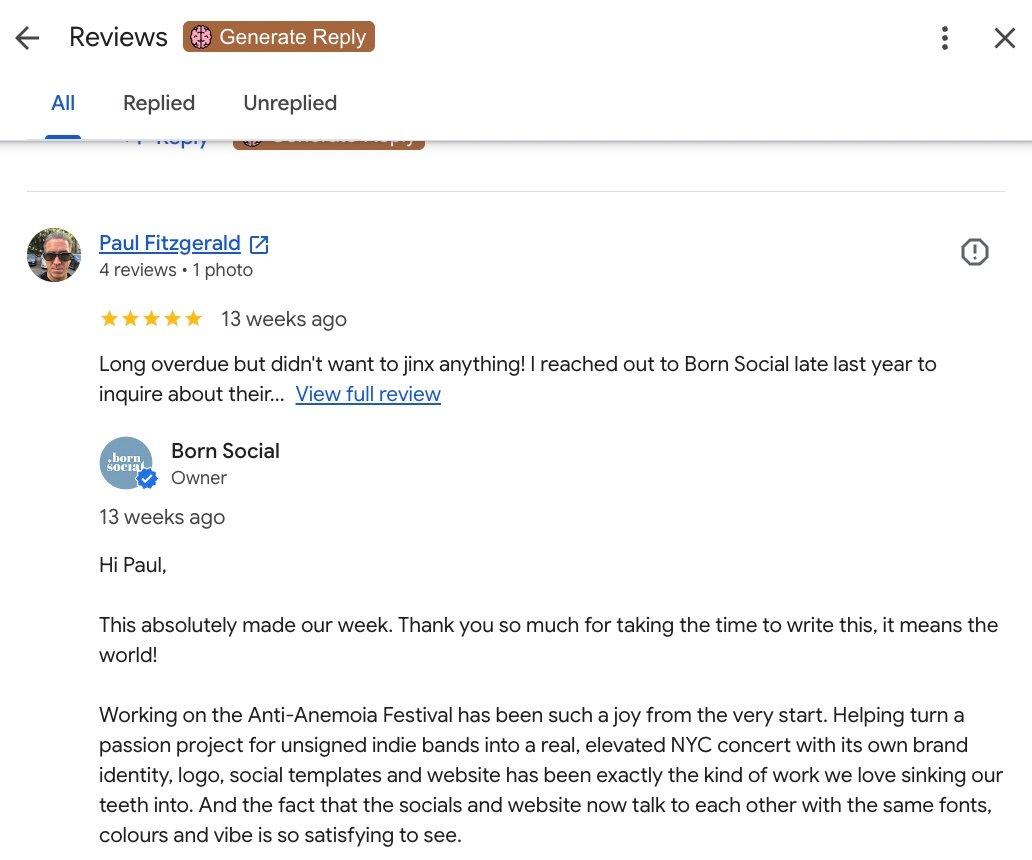
Respond to Positive and Negative Reviews

Responding to reviews shows that your business values customer feedback.

A good response should be personal, concise and relevant to what the customer has written. Avoid using every response as an opportunity to insert services and location keywords.

Negative reviews should be handled calmly. Acknowledge the customer’s concern, explain what you can do next and move any discussion involving personal details to a private channel.

Do not become defensive or argue publicly. A professional response can reassure future customers even when the original complaint cannot be resolved.

Use Reviews Across Your Website

Relevant reviews can also strengthen service and location pages.

For example, a testimonial from a Leeds customer will normally be more persuasive on a Leeds location page than a generic review from an unidentified customer.

Only publish genuine feedback and obtain permission where necessary. Include useful context such as the service provided, customer type or project location when it is appropriate to do so.

8. Build Relevant Local Backlinks

A backlink is a link from another website to yours.

Relevant backlinks can help search engines discover your pages and assess the reputation of your business. They can also generate referral traffic and introduce your company to potential customers.

For local SEO, useful links may come from:

  • Local news websites

  • Chambers of commerce

  • Industry associations

  • Suppliers and professional partners

  • Local business organisations

  • Charities and community groups

  • Event websites

  • Customer or client websites

  • Relevant business publications

Focus on earning links that make sense outside SEO. If a link could introduce your business to relevant customers, strengthen your reputation or verify a genuine professional relationship, it is more likely to be worthwhile.

Practical Ways to Earn Local Links

You could:

  • Contribute expert advice to a local publication

  • Sponsor a genuine local event or community organisation

  • Join a relevant business or professional association

  • Publish original local research

  • Provide useful statistics or commentary to journalists

  • Create a detailed case study with a local client

  • Ask suppliers and partners to acknowledge genuine working relationships

  • Reclaim unlinked mentions of your company

  • Produce a resource that local organisations will want to reference

For example, an estate agent could publish an original report analysing property activity within its local market. A builder could document a distinctive renovation project and explain the challenges involved. A marketing agency could publish anonymised performance benchmarks using genuine campaign data.

These assets give other websites a reason to reference the business.

Avoid Manipulative Link Building

Avoid buying large quantities of links, submitting to irrelevant directories or exchanging links purely to influence rankings.

Be cautious if a provider promises hundreds of backlinks without explaining where they will come from. A smaller number of relevant, editorial links can provide more value than a large volume of links from unrelated websites.

Anchor text should also develop naturally. Most websites will link using your business name, page title, URL or a phrase that suits the surrounding sentence. Repeatedly forcing an exact keyword into backlinks can create an unnatural pattern.

9. Add Appropriate Local Business Schema

Schema markup is structured data added to a webpage to help search engines understand its content.

Local business schema can provide information about:

  • Business name

  • Address

  • Telephone number

  • Website

  • Opening hours

  • Geographic coordinates

  • Business type

  • Areas served

  • Social profiles

Use the most specific and accurate schema type available. A restaurant, dentist or estate agency may have a more suitable type than the general LocalBusiness category.

For businesses with multiple physical locations, each genuine branch can have its own location page and corresponding business information. The details in the markup should match the information visible on that page.

A service-area business that keeps its address private should not expose that address through schema markup. It can provide appropriate contact and service-area information instead.

Other useful schema types may include:

  • Organization for company information

  • BreadcrumbList for website navigation

  • Article for guides and blog posts

  • Person for author information

  • Service for service-related content

Schema does not guarantee higher rankings or enhanced search results. Its primary purpose is to describe information clearly in a machine-readable format.

Only mark up information that is accurate and represented on the page. Adding misleading ratings, locations, services or other information can create structured-data errors and trust issues.

Follow Google’s LocalBusiness structured data guidance and test the implementation using Google’s Rich Results Test and the Schema.org validator.

10. Measure Local SEO Performance

Local SEO should be measured by more than keyword rankings.

A higher position is useful, but the real objective is to generate more calls, enquiries, bookings, visits and sales from customers in your target area.

Track performance across your website and Google Business Profile to understand whether improved visibility is producing meaningful results.

Monitor Local Keyword Rankings

Track the main service and location combinations identified during your keyword research.

This could include:

  • SEO consultant Leeds

  • Plumber Wakefield

  • Accountant near me

  • Commercial cleaning Yorkshire

  • Emergency electrician Morley

Local results can change depending on where the person searches, so a single national ranking does not provide the full picture.

Use a local rank-tracking tool that allows you to check results from relevant towns, neighbourhoods or postcodes. Grid-based map tracking can also show how Google Business Profile visibility changes across your service area.

Focus on patterns rather than daily fluctuations. Review whether important keywords are improving across several weeks or months.

Review Google Business Profile Performance

Google Business Profile performance data can help you understand how people find and interact with your listing.

Depending on the business and available data, you may be able to monitor:

  • Search views

  • Map views

  • Website clicks

  • Telephone calls

  • Direction requests

  • Messages

  • Bookings

Compare these actions over consistent periods. Account for seasonal changes, promotions and changes in customer demand before attributing every increase or decline to SEO.

Track Website Enquiries
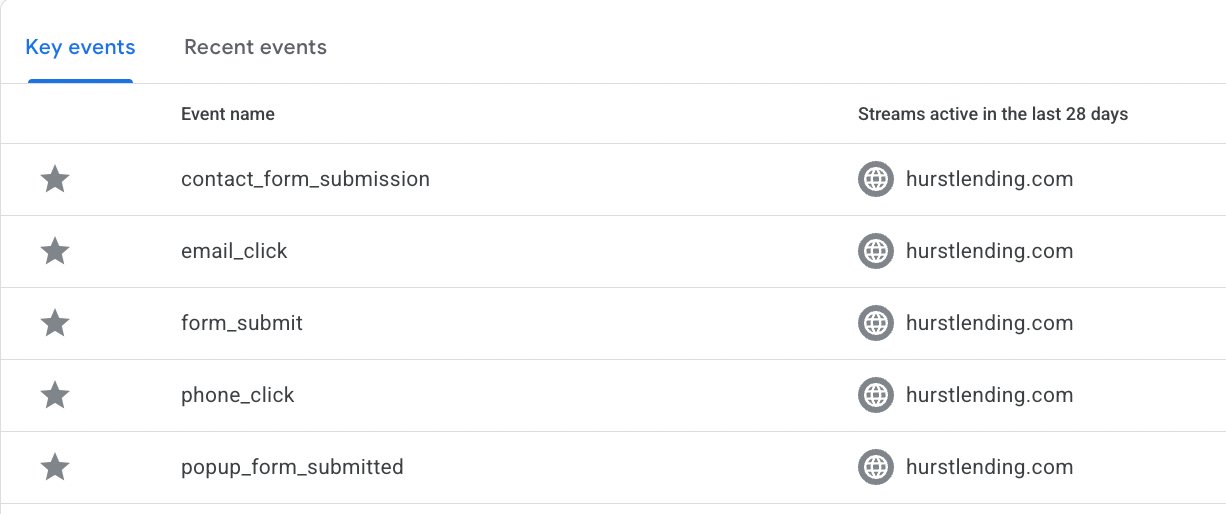
example key events in ga4

Use Google Analytics 4 and Google Search Console to monitor traffic reaching your service and location pages.

Important website conversions may include:

  • Completed contact forms

  • Click-to-call actions

  • Email link clicks

  • Booked appointments

  • Quote requests

  • Online purchases

  • Downloads

  • Live-chat enquiries

Where possible, connect enquiries with your customer relationship management system or sales records. This helps you distinguish website activity from qualified leads and completed sales.

Call-tracking software can provide additional information about telephone enquiries. Make sure any implementation is configured carefully so that your main business number remains consistent for users and search engines.

Measure Leads and Revenue, Not Only Traffic

An increase in traffic is not valuable if those visitors are outside your service area or looking for something you do not provide.

Review:

  • Which locations generate enquiries

  • Which services attract qualified leads

  • Which pages contribute to conversions

  • How many leads become customers

  • The approximate value of those customers

  • Whether local organic performance is improving over time

This information can reveal where to focus your next round of optimisation.

For example, a service page may attract relatively little traffic but generate several valuable enquiries. Another page may receive hundreds of visits without producing any leads. Traffic alone would make the second page appear more successful, even though the first contributes more to the business.

Local SEO Checklist

Use this checklist to review the foundations of your local search presence.

Area
What to Check
Google Business Profile
Claimed, verified and fully completed
Business categories
Accurate primary and secondary categories
Contact information
Correct business name, address and phone number
Opening hours
Accurate regular and special hours
Services
Important products and services clearly listed
Photographs
Genuine, current and relevant business images
Keyword research
Services mapped against genuine local demand
Service pages
Each core service has a useful dedicated page
Location pages
Unique pages for genuine offices or service areas
Page titles and headings
Clear descriptions of each page’s subject
Internal links
Services, locations, guides and case studies connected
Citations
Important listings accurate and duplicates addressed
Reviews
Genuine reviews collected and answered consistently
Local backlinks
Links earned from relevant organisations and publications
Schema markup
Accurate structured data added and validated
Mobile usability
Pages easy to use on mobile devices
Website performance
Important pages load reliably and without major errors
Conversion tracking
Forms, calls, bookings and sales measured
Search performance
Keywords, impressions and clicks reviewed regularly
Business outcomes
Qualified leads and revenue assessed alongside rankings

Do not treat this as a one-time task. Business information changes, competitors improve their websites and customer search behaviour evolves.

Review the essential information regularly and carry out a more detailed local SEO assessment at least several times each year.

Common Local SEO Mistakes

Local SEO mistakes can confuse search engines, weaken customer trust and prevent otherwise good businesses from appearing prominently.

Here are some of the most common problems to avoid.

Creating Thin Location Pages

Changing the town name on an otherwise identical page does not create useful local content.

Every location page should provide information that is genuinely relevant to customers in that area. This might include local services, projects, testimonials, travel information, team members or common customer questions.

Do not create pages for locations you do not meaningfully serve simply because the keywords have search volume.

Targeting Too Many Keywords With One Page

A single page cannot effectively satisfy every type of local search.

For example, a general “SEO services Leeds” page may cover closely related searches such as “SEO consultant Leeds” and “Leeds SEO agency.” However, it should not also attempt to rank in detail for Google Ads management, website development, SEO training and every other marketing service.

Give each important page a clear primary purpose.

Creating Several Pages for the Same Search Intent

The opposite problem occurs when a business creates too many similar pages.

Separate pages targeting “SEO Leeds,” “SEO services Leeds” and “SEO consultant Leeds” may compete with one another if they offer essentially the same information.

Group closely related keywords by intent and assign them to one comprehensive page.

Using an Ineligible or Misleading Business Address

Do not use a virtual office, temporary workspace or address where your business does not genuinely operate simply to appear in another location.

Service-area businesses should hide addresses where customers are not received and specify the areas they actually serve.

Your Google Business Profile must reflect how the business operates in the real world.

Inconsistent Business Information

Old telephone numbers, incorrect addresses and conflicting opening hours create a poor customer experience.

Prioritise correcting information on your:

  • Website

  • Google Business Profile

  • Bing Places listing

  • Apple Business Connect listing

  • Major industry directories

  • Important local listings

  • Active social profiles

You do not need to obsess over minor formatting differences. Focus on information that could genuinely mislead a customer.

Choosing Irrelevant Business Categories

Adding loosely related categories does not make your Google Business Profile relevant to more searches.

Choose a primary category that accurately represents your main service. Add secondary categories only when they describe meaningful parts of the business.

Your categories, website content and listed services should support the same overall business offering.

Keyword Stuffing

Repeatedly inserting a location into headings, paragraphs, image descriptions and review responses makes content difficult to read.

Write naturally and include locations where they provide useful context.

A page can establish local relevance through its address, service information, project examples, testimonials, internal links and wider website structure. It does not need to repeat “Leeds SEO services” in every paragraph.

Neglecting Customer Reviews

A profile with few recent reviews may struggle to earn trust, even when it appears prominently.

Ask genuine customers for feedback as part of your normal follow-up process. Respond professionally and continue collecting reviews over time.

Never buy reviews or offer rewards in exchange for positive ratings.

Building Large Numbers of Weak Weak Links

Submitting a website to hundreds of low-quality directories is not an effective substitute for earning genuine authority.

Focus on links and mentions from relevant local organisations, clients, partners, industry websites and reputable publications.

Quality, relevance and authenticity matter more than the total number of links.

Ignoring Mobile Users

Many local searches happen when someone wants to call, visit or make a quick decision.

Make sure mobile visitors can easily:

  • Read your content

  • View your services

  • Find your address or service area

  • Check opening hours

  • Call your business

  • Request a quote

  • Book an appointment

  • Use your navigation

Intrusive pop-ups, slow pages and difficult forms can turn potential customers away before they make contact.

Measuring Rankings Without Measuring Leads

Ranking first for an irrelevant term does not make a local SEO campaign successful.

Track which searches and pages produce calls, forms, bookings and sales. This helps you focus on the services and locations that contribute to business growth rather than chasing visibility for its own sake.

How Long Does Local SEO Take?

Most businesses should allow at least three to six months to see meaningful improvements from local SEO. However, there is no fixed timeframe.

A new business in a competitive city may take longer than an established company serving a smaller area. Some improvements, such as correcting an inaccurate Google Business Profile, can produce results relatively quickly. Building stronger website authority and reaching the top local positions usually takes longer.

The timeframe can depend on:

  • Your current local visibility

  • Website quality and technical health

  • Google Business Profile optimisation

  • Strength of local competitors

  • Number and quality of customer reviews

  • Existing citations and backlinks

  • Location and proximity to searchers

  • Demand for your services

  • Consistency of ongoing SEO work

A business ranking on page two may have a clearer short-term opportunity than a website Google has only recently discovered.

Changes also need time to be crawled, indexed and reassessed. Avoid judging an update after only a few days. Monitor performance over consistent monthly and quarterly periods.

The most useful early signs include:

  • More relevant keywords entering the top 20

  • Improved visibility across the target area

  • Growth in Google Business Profile interactions

  • More visits to service and location pages

  • An increase in calls and qualified enquiries

Local SEO should be treated as an ongoing business activity rather than a one-time setup. Competitors, customer behaviour and search results continue to change.

Should You Manage Local SEO Yourself?

Small businesses can manage many local SEO tasks themselves.

You may not need outside support if you operate in a relatively uncompetitive market, have only one location and can consistently maintain your website and Google Business Profile.

Tasks that can often be handled internally include:

  • Updating opening hours

  • Adding genuine business photographs

  • Requesting customer reviews

  • Responding to feedback

  • Correcting basic directory listings

  • Publishing company updates

  • Monitoring calls and enquiries

However, local SEO becomes more complex when a business has several services, multiple locations or strong competitors.

Professional support may be useful if:

  • Your rankings have stopped improving

  • Competitors consistently outrank you

  • Several pages compete for the same keywords

  • Your Google Business Profile has been suspended

  • You are opening or closing locations

  • Your website contains technical problems

  • You need to create a scalable location structure

  • Traffic is increasing without producing enquiries

  • You cannot identify which activity generates leads

An SEO consultant can help prioritise the work rather than treating every possible optimisation as equally important.

Plumtree SEO provides SEO consultancy in Leeds for local companies and managed SEO services for businesses that want ongoing strategy, implementation and reporting.

Whether you manage local SEO yourself or work with a specialist, focus on actions that improve the experience of real customers and contribute to measurable business growth.

How I Approach Local SEO Campaigns

After working on SEO campaigns across the UK and international markets, I have found that successful local SEO usually begins with focus.

Many businesses try to target too many services and locations at once. This spreads their website content, internal links and authority across pages that have little chance of ranking.

My approach starts by answering three questions:

  1. Which services generate the most value for the business?

  2. Where are the customers most likely to come from?

  3. What are people actually searching for in those locations?

The answers determine which pages should receive priority.

Start With Commercial Value

Search volume matters, but it should not be the only consideration.

A keyword that attracts ten highly relevant visitors could produce more revenue than one attracting hundreds of people with weak buying intent.

I therefore consider:

  • Search intent

  • Potential customer value

  • Existing rankings

  • Strength of competitors

  • Relevance to the business

  • Likelihood of generating an enquiry

  • Resources required to compete

This helps identify where SEO activity is most likely to produce a return.

Map Services and Locations Carefully

I normally separate the website into three main types of pages:

  • Core service pages explaining what the business provides

  • Location pages demonstrating relevance to genuine service areas

  • Informational content answering questions potential customers ask

Each page needs a clear role.

Closely related keywords can often be targeted together. Different services or substantially different customer needs may require separate pages.

This avoids creating several pages that compete for the same searches.

Improve Existing Pages Before Creating More

Publishing new pages is not always the best first step.

An existing page may already appear for relevant searches but lack the depth, internal links or authority needed to reach page one. Improving that page can produce results faster than starting again with a new URL.

I use Google Search Console to identify:

  • Pages receiving impressions but few clicks

  • Keywords ranking between positions 8 and 30

  • Queries that do not fully match the existing content

  • Pages losing visibility

  • Unexpected keywords Google associates with a page

This data shows how Google currently understands the website and where improvements may have the greatest effect.

Connect Visibility With Conversions

Rankings are only one part of the process.

A local SEO campaign should also make it easy for someone to understand the service, trust the business and take the next step.

That means reviewing:

  • Calls to action

  • Contact forms

  • Telephone links

  • Reviews and testimonials

  • Project examples

  • Service information

  • Mobile usability

  • Conversion tracking

The objective is not simply to appear higher in Google. It is to turn relevant local visibility into qualified enquiries and customers.

Review and Refine the Strategy

Local SEO is rarely completed in one round of changes.

I monitor which pages and queries improve, which locations generate leads and where competitors remain stronger. The next phase of work is then based on evidence rather than assumptions.

This may involve improving a service page, expanding a useful guide, earning relevant links or strengthening the connection between a website and its Google Business Profile.

Consistent improvement usually produces better long-term results than chasing individual tactics or reacting to every short-term ranking change.

Build a Local Presence That Generates Business

Local SEO helps your business appear when nearby customers are actively searching for the services you provide.

Success depends on more than optimising a Google Business Profile or adding location keywords to your website. Your service pages, location content, business information, reviews, citations and backlinks must present a consistent and trustworthy picture.

Start with the services and locations most likely to generate customers. Build strong pages around those opportunities, then measure whether improved visibility leads to calls, enquiries and sales.

You do not need to complete everything at once. Prioritise the changes that address your biggest weaknesses and provide the most value to potential customers.

If you need help deciding where to start, Plumtree SEO provides SEO consultancy in Leeds and managed SEO services for businesses across the UK.

We can review your current visibility, identify your strongest opportunities and create a practical strategy focused on qualified traffic and enquiries.

FAQ's

Local SEO helps a business appear when people search for nearby products, services or providers. It includes optimising your website, Google Business Profile, business listings, reviews and local authority. The aim is to generate visibility and enquiries from customers within the locations you serve.

Start by claiming and completing your Google Business Profile. Check that your business name, address, phone number, opening hours and website are accurate. You should then identify your most valuable services and local keywords before improving the corresponding pages on your website.

A website can rank in localised organic results without a Google Business Profile. However, an eligible business will normally need a verified profile to appear prominently in Google Maps and the local pack. Your website and profile should support one another as part of the same local SEO strategy.

Local SEO targets customers within particular towns, cities or service areas. National SEO targets a broader audience across a country. Local campaigns place greater emphasis on Google Business Profile, proximity, reviews, citations and location relevance, while national campaigns are less dependent on the searcher’s physical location.

Local SEO costs depend on the number of services and locations, the strength of competitors and the condition of the existing website. A small single-location business may require less work than a multi-location company operating in several competitive markets. Request a tailored quote based on your objectives and current visibility.

Some improvements may appear within several weeks, but businesses should generally allow three to six months for meaningful progress. Competitive locations and new websites can take longer. Existing authority, website quality, reviews, backlinks and the consistency of ongoing work all affect the timeframe.

Review important business details whenever something changes. Opening hours, services, photographs and customer reviews should be managed continuously. Website performance, keyword rankings and lead data should normally be reviewed monthly, with a wider strategy review completed every three to six months.

Table of Contents

daniel plumtree ceo at plumtree seo

Author - Daniel Plumtree

Daniel Plumtree is the driving force behind Plumtree SEO, with nearly a decade of experience in search engine optimization. After mastering the art of SEO through agency work and freelancing, Daniel launched Plumtree SEO to break free from traditional SEO methods. Passionate about transforming digital strategies, Daniel brings an innovative and rebellious edge to every project. His goal? To help businesses not just rank but truly stand out in the digital world. Follow along as Daniel redefines what SEO can be with a blend of wit and expertise.

How Is Your Website Performing?

Discover your site’s traffic, see how you stack up against competitors, and check your site’s technical health.

Ready for Your Success Story? Get a Custom Proposal!

Transform your digital presence just like our successful clients. Click to get a personalized proposal from Plumtree SEO. Let’s discuss your goals and how we can achieve them together. Schedule a call or send us an email today – your journey to digital excellence awaits!